An Interactive Game Experience for Playful Social Connection in Everyday Spaces
Feb 16, 2026
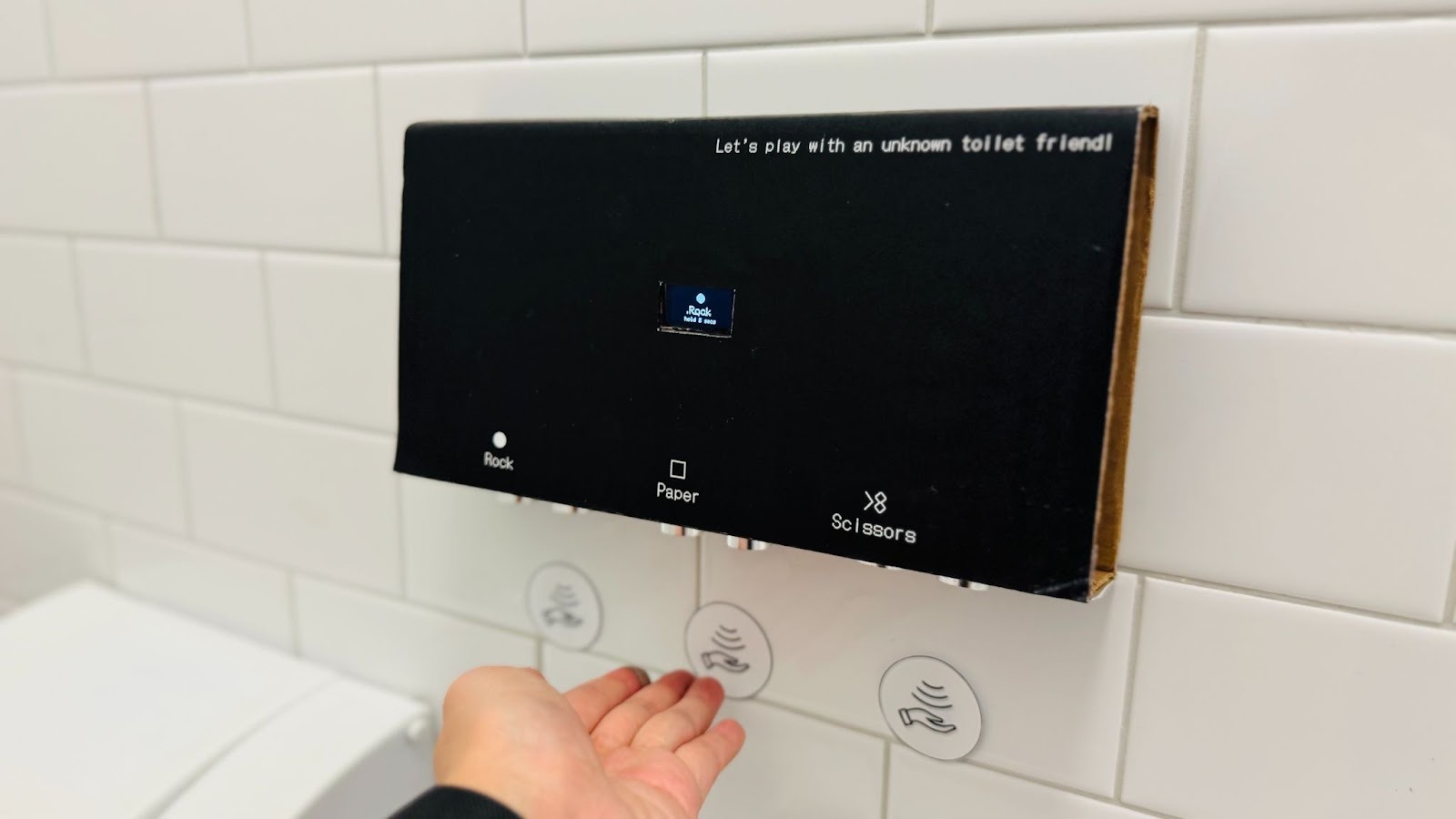
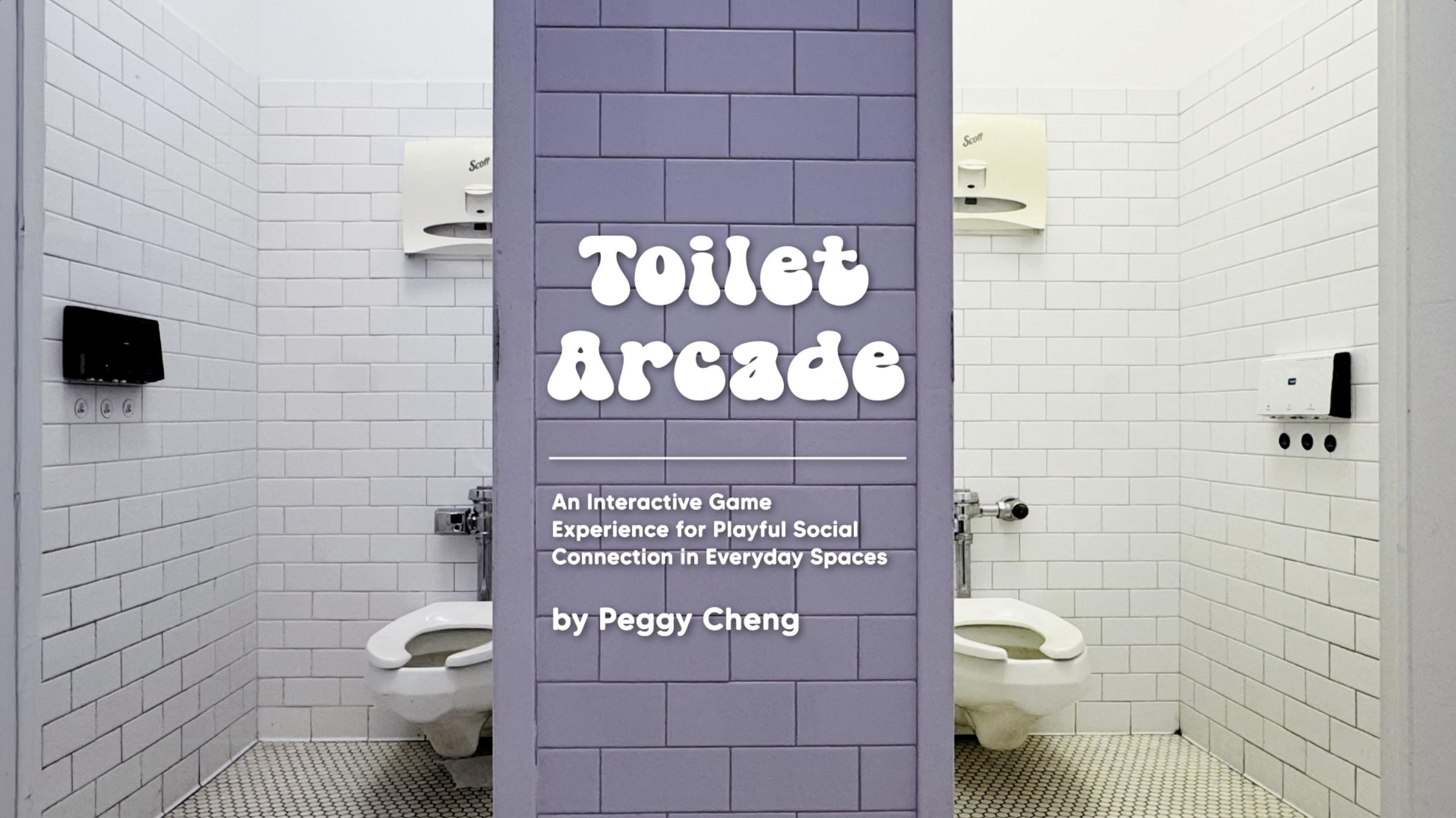
Toilet Arcade is an interactive game installation that brings play into one of the most overlooked public spaces: the restroom. By placing simple, anonymous multiplayer games inside toilet stalls, the project explores how strangers can engage in dialogue through indirect interaction rather than direct communication.
The project is guided by a central question:
How can we create meaningful interaction between strangers within a highly private yet shared public space?
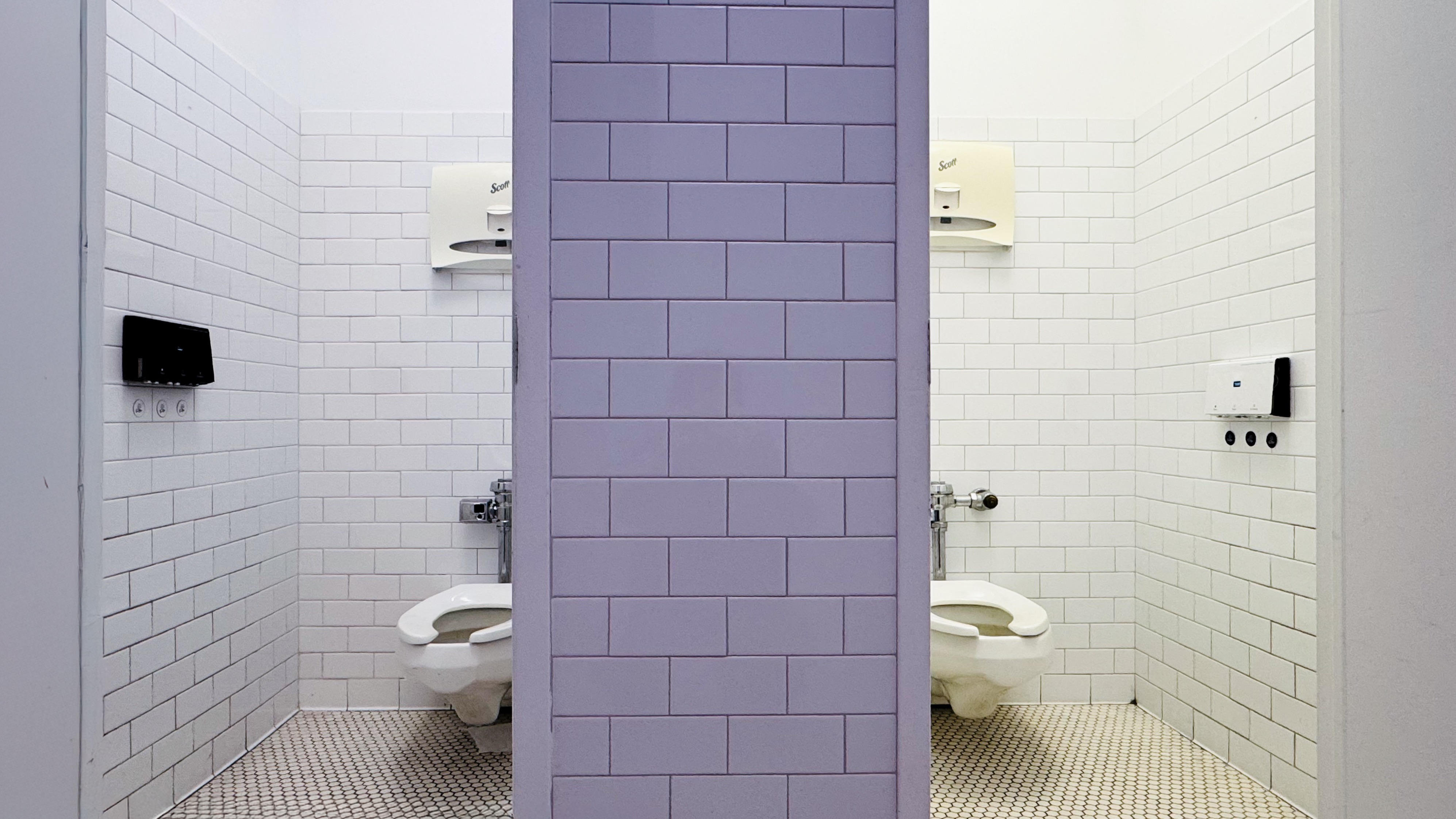
Public toilets are rarely treated as social or cultural environments. They are functional, hidden, and often associated with discomfort or avoidance. Yet they are used daily and shared by many. Inspired by moments of quiet connection in everyday life and by the idea of play as a social “magic circle,” Toilet Arcade reframes the restroom as a micro-public sphere where small acts of play can produce shared experience.
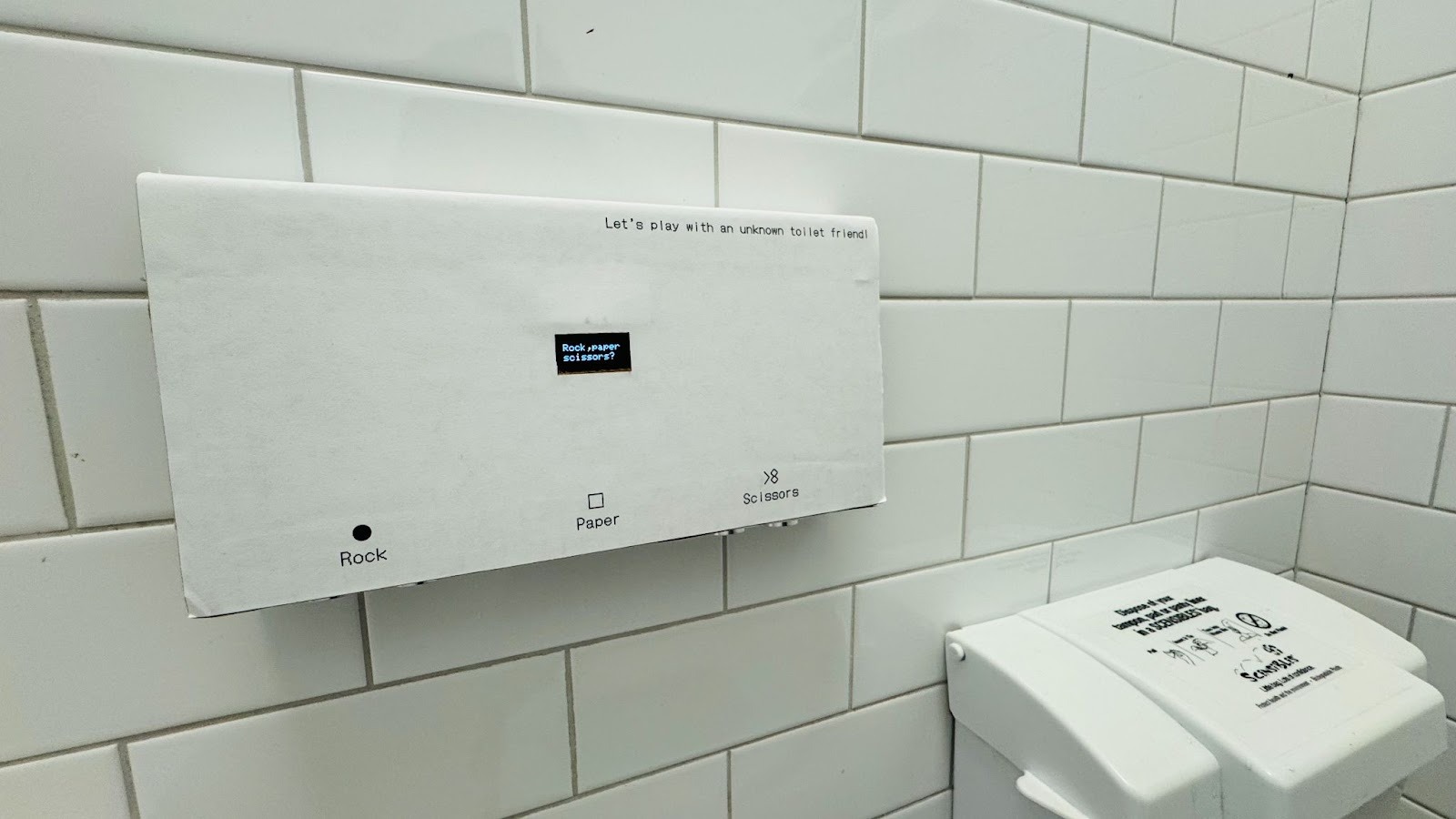
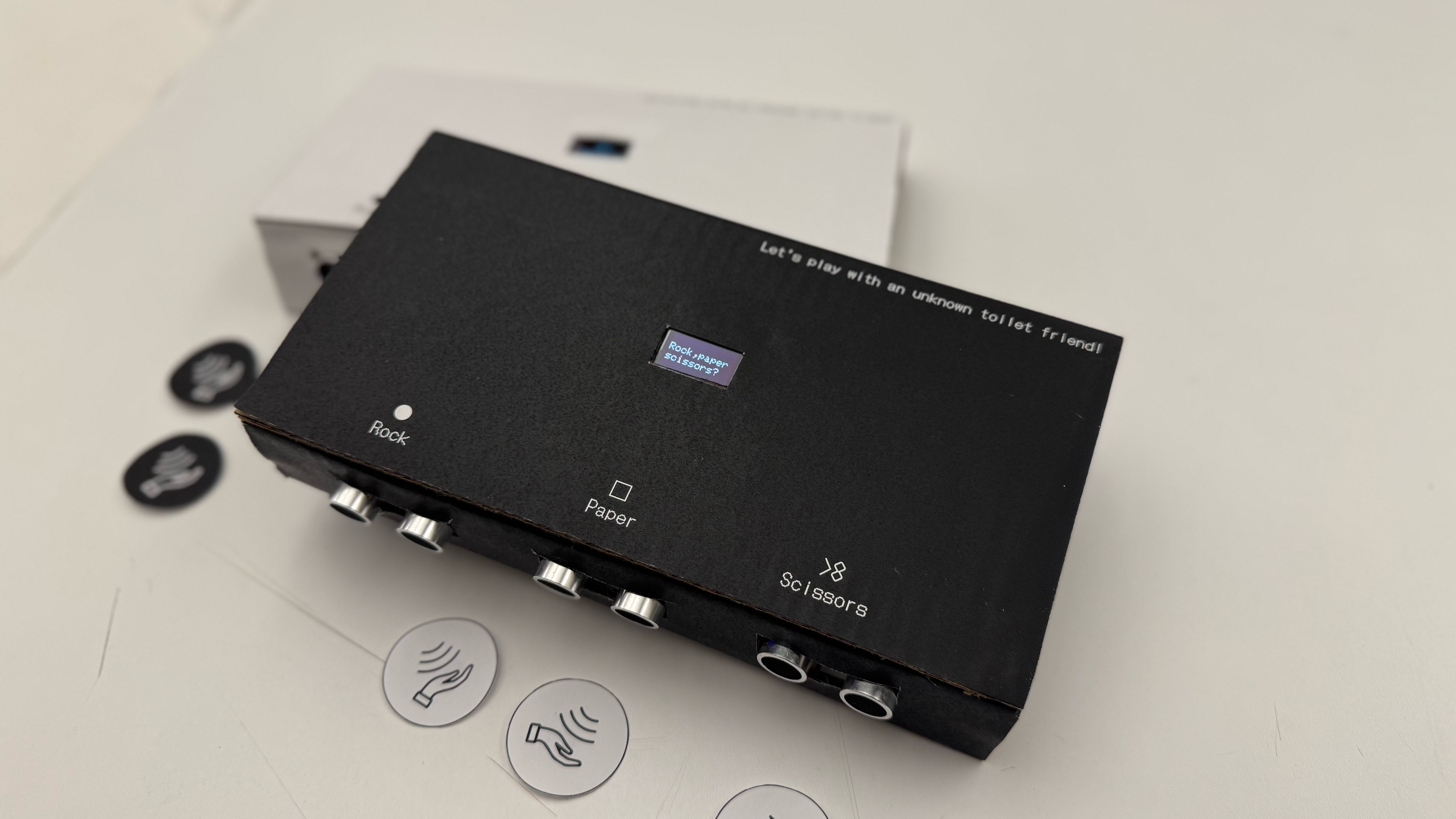
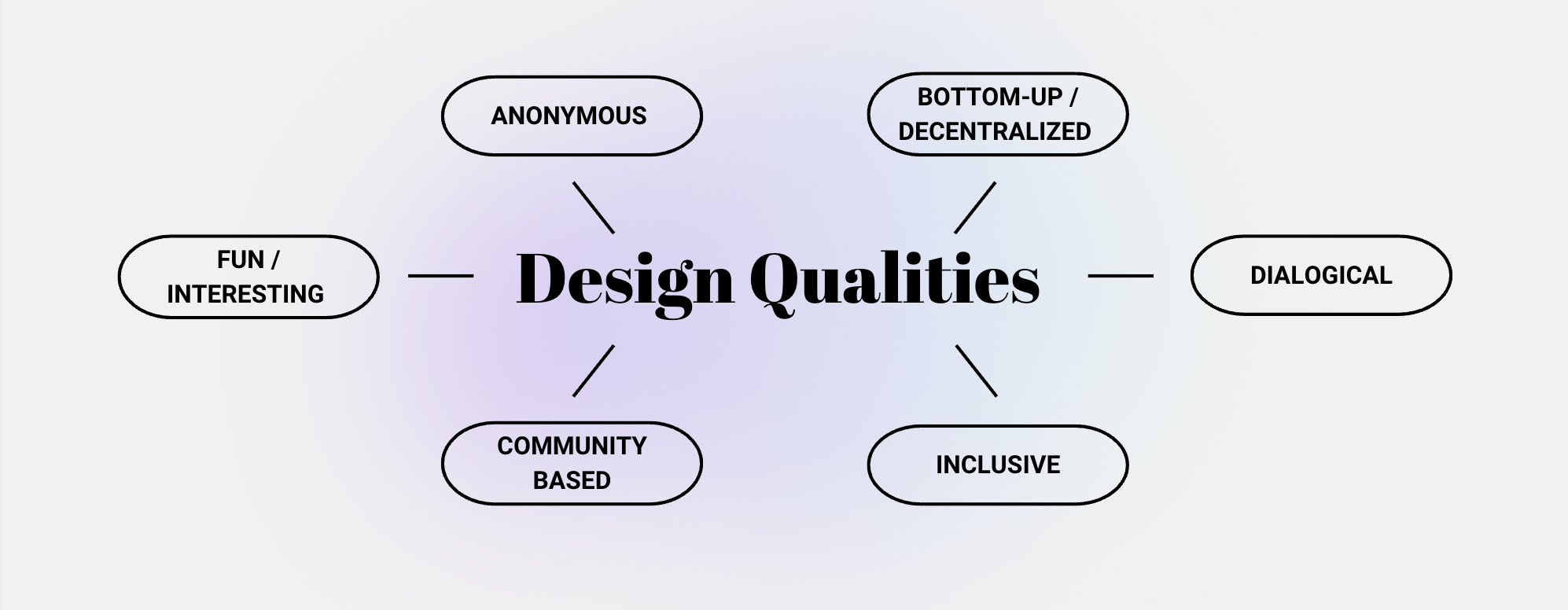
Toilet Arcade is conceived as a miniature “arcade” embedded inside restroom stalls. It combines physical and digital games that are fast, intuitive, and culturally accessible. The system is designed to support:
Rather than encouraging competition or performance, the games invite players to acknowledge one another’s presence through shared actions and timing. This allows interaction to occur without identity disclosure, reducing social risk while fostering connection.
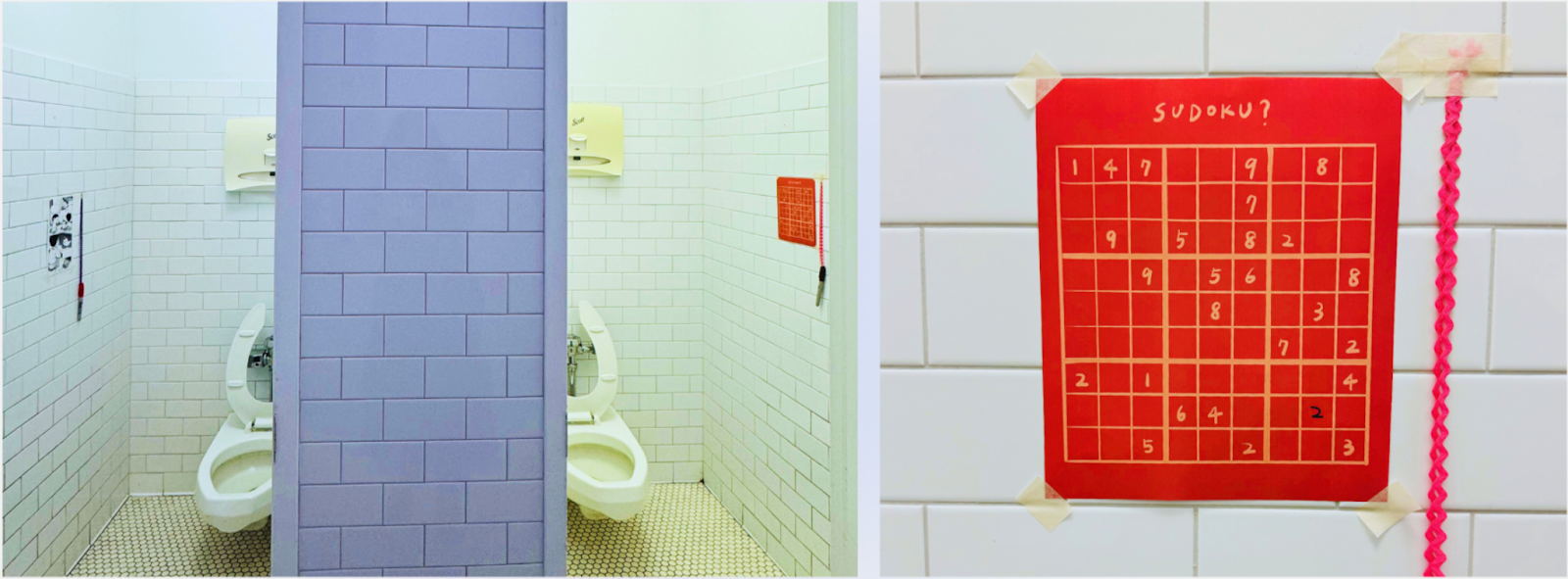
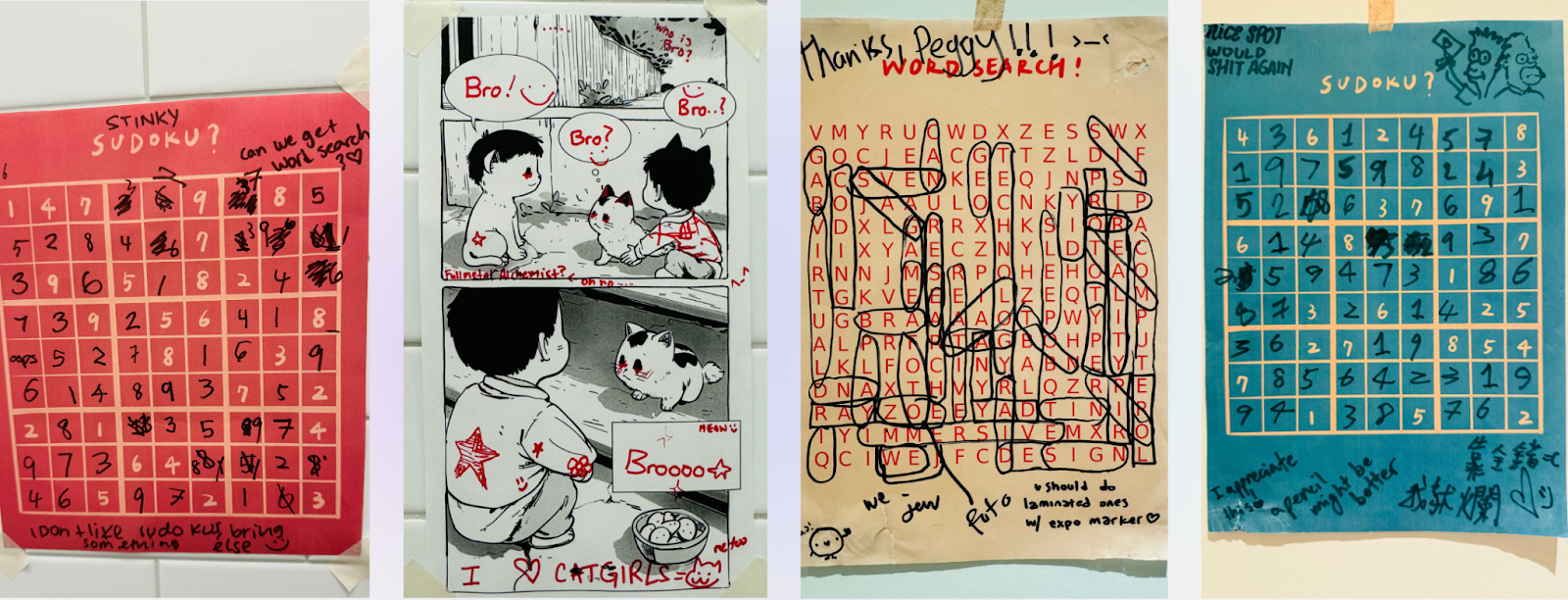
The project began with low-tech, paper-based games such as Sudoku, word searches, and comic panels installed inside toilet stalls. Participants were invited to write directly on the paper. Beyond gameplay, many users left messages, jokes, and requests for new games. These traces revealed an unexpected desire for interaction and co-creation in a highly private setting.
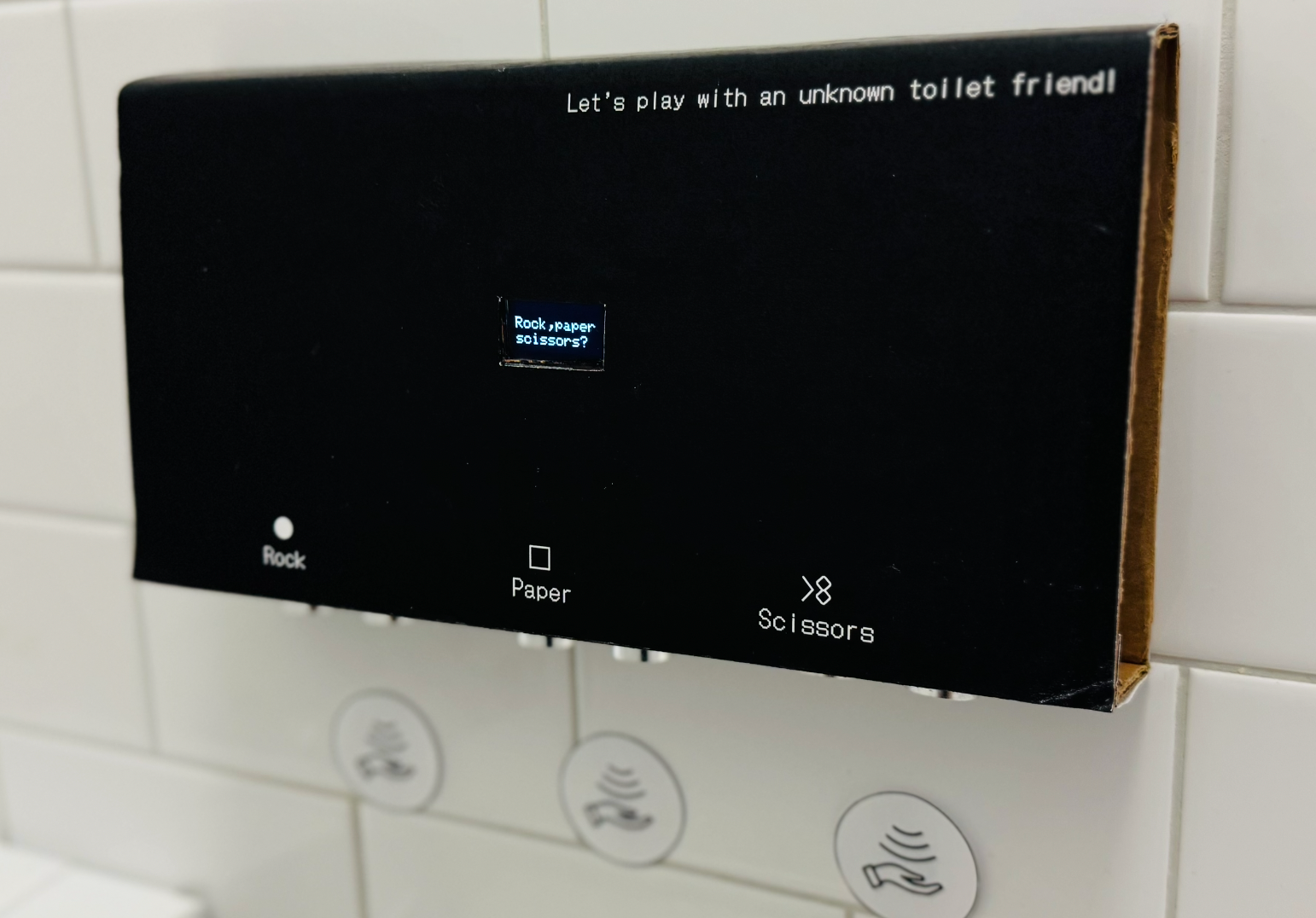
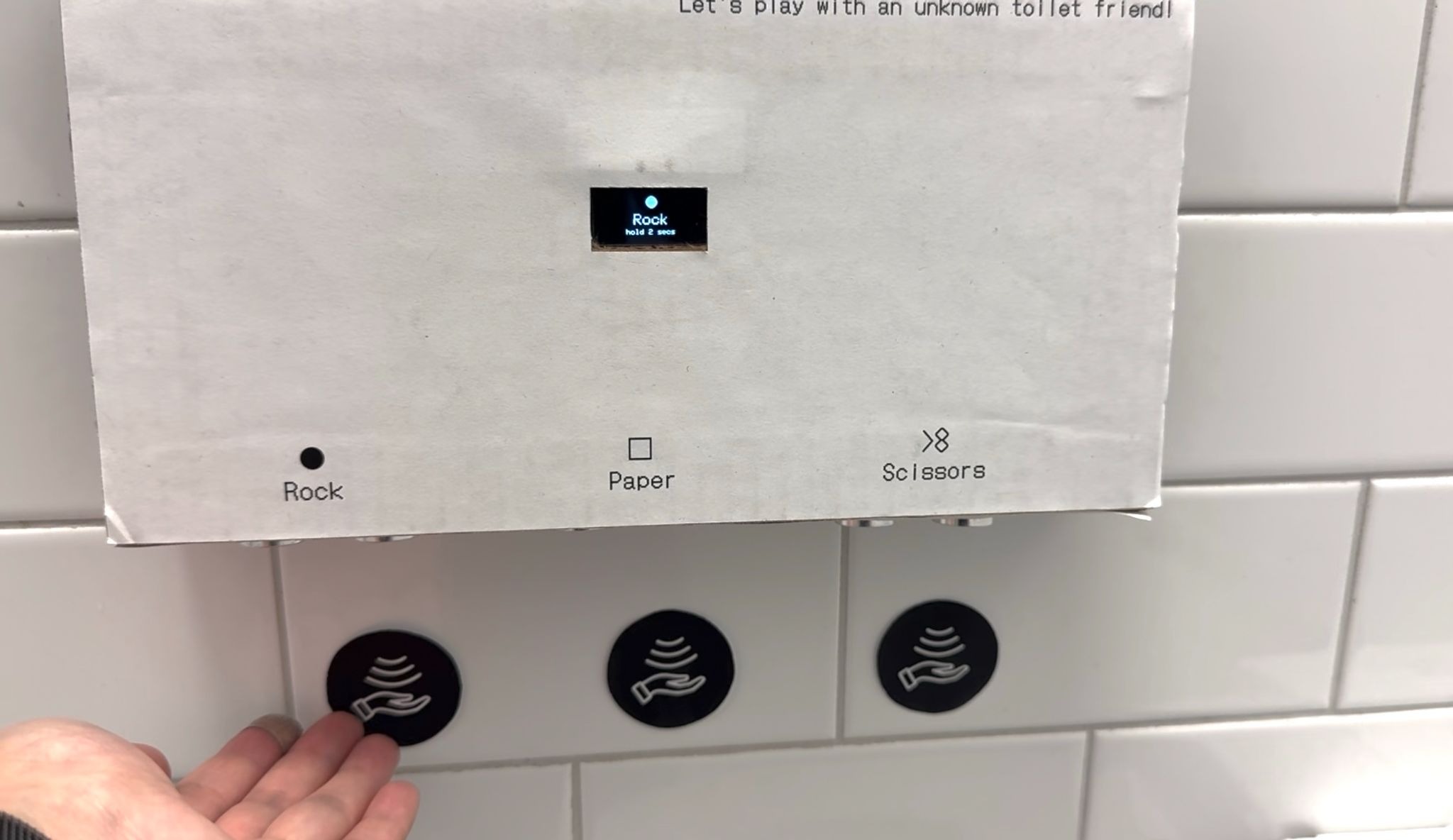
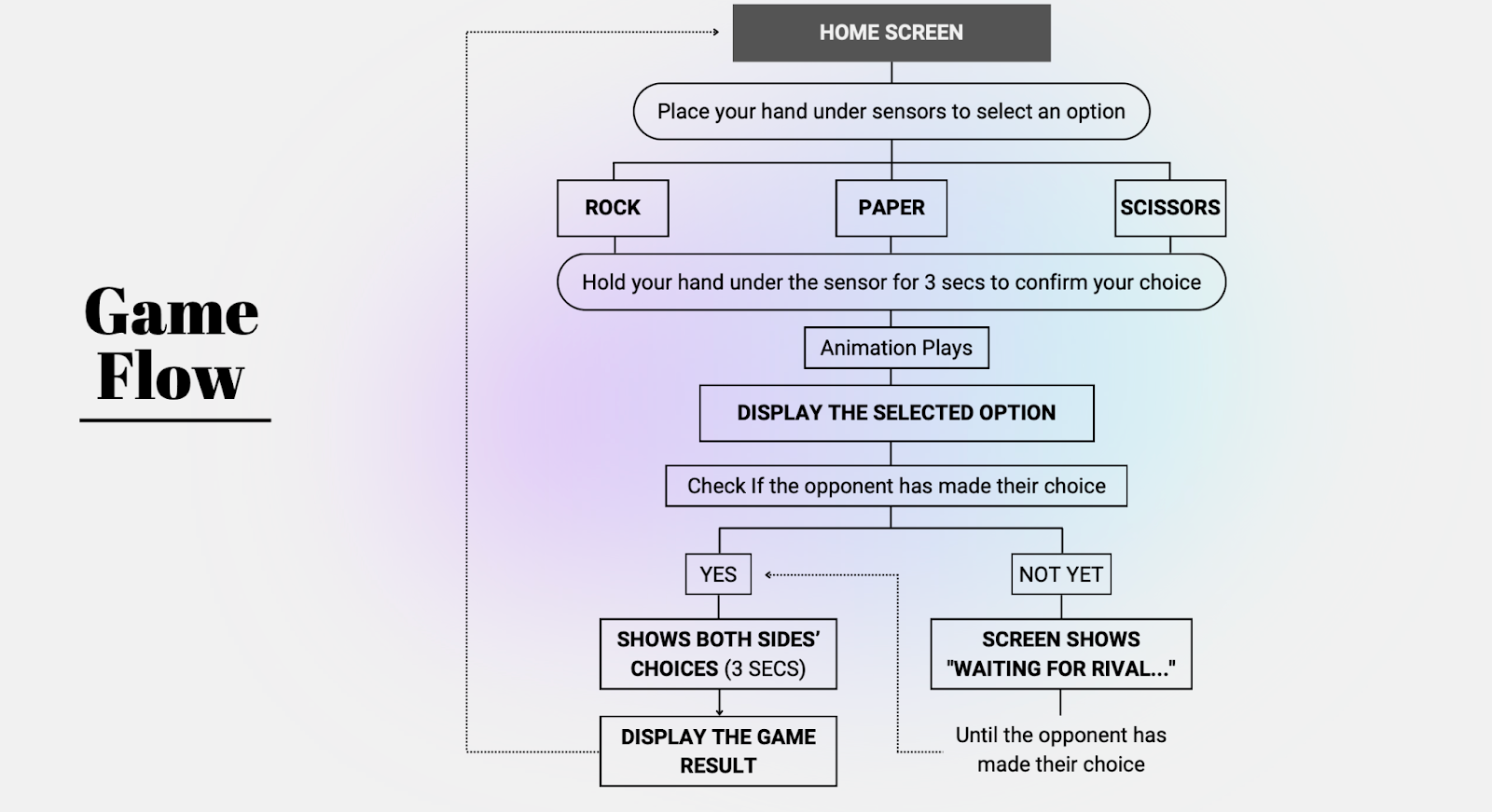
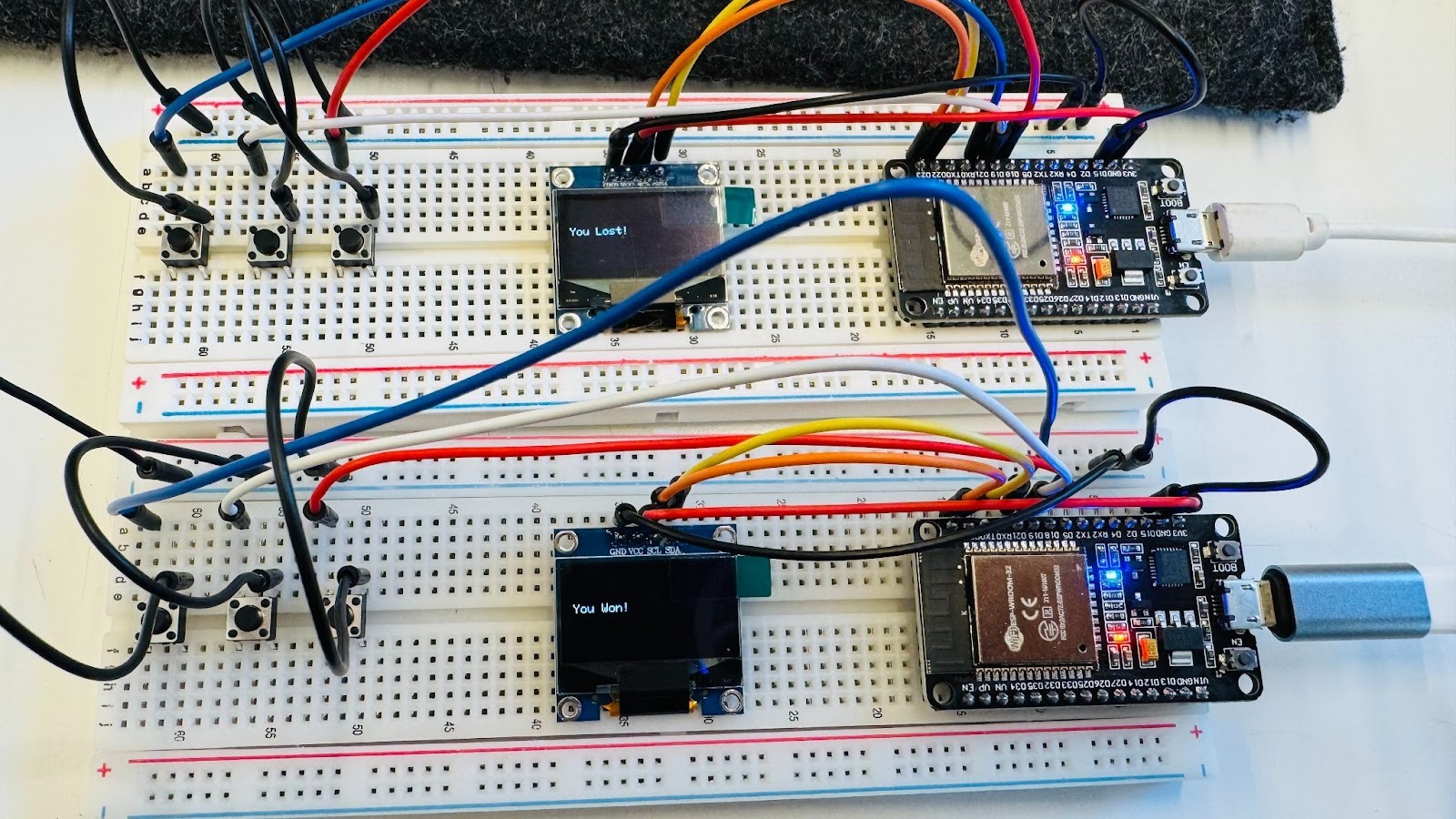
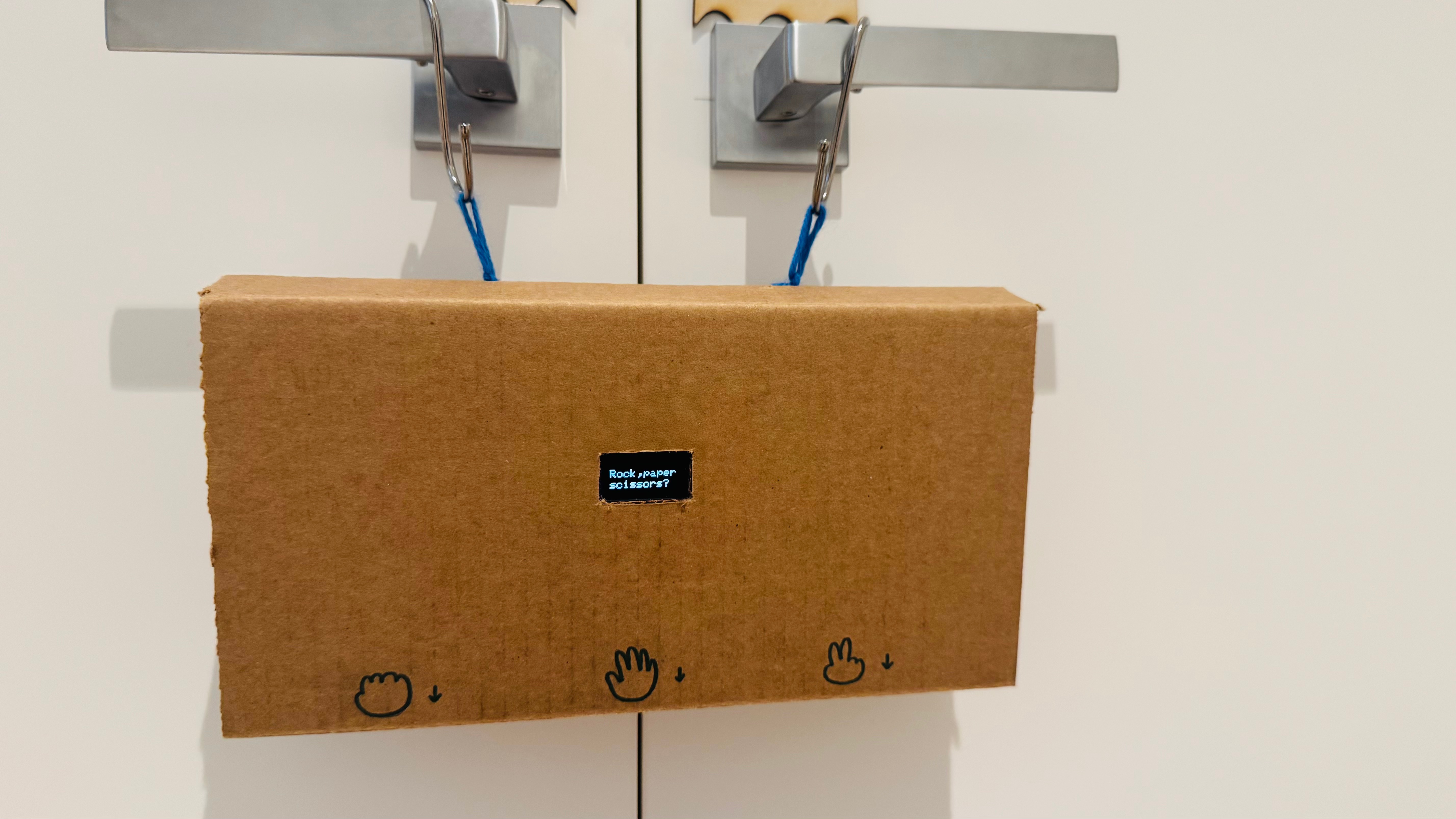
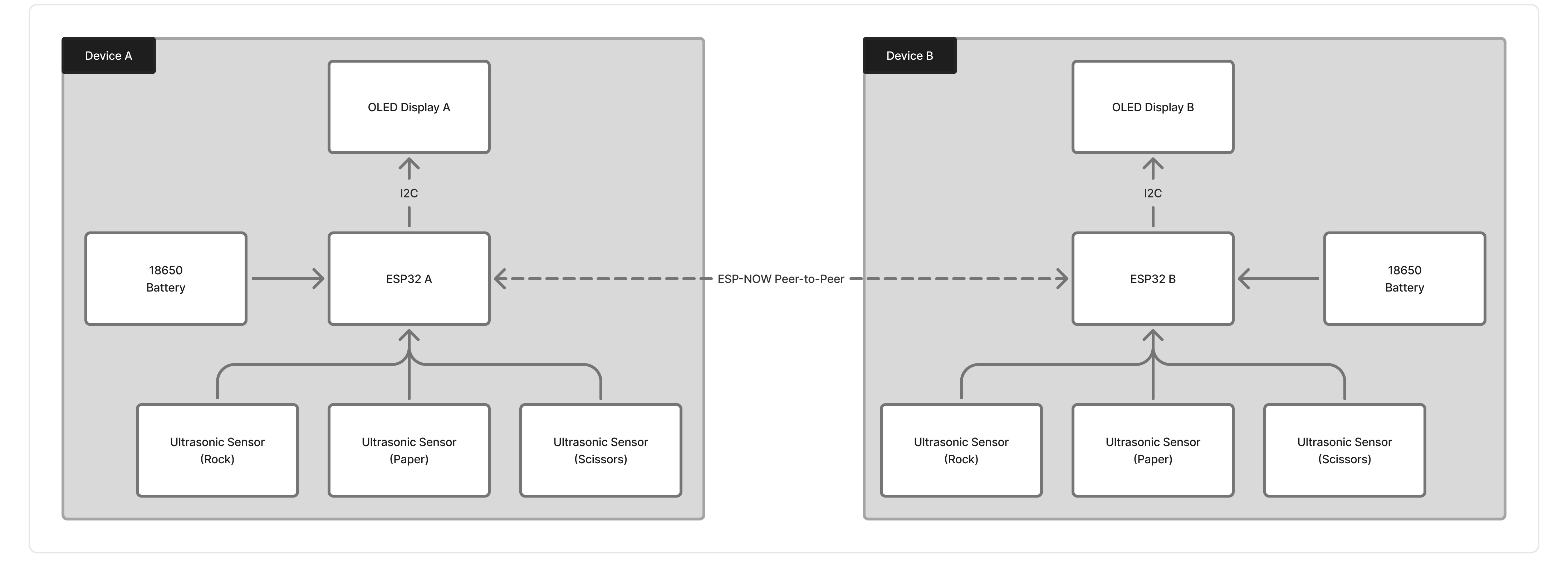
Building on this discovery, a digital multiplayer prototype was developed using microcontrollers, OLED displays, and non-contact sensors. Rock-Paper-Scissors was selected as the interaction framework due to its speed, simplicity, and cross-cultural familiarity. Two players in adjacent stalls could play together anonymously by selecting gestures through sensors.


Playtesting revealed key insights:
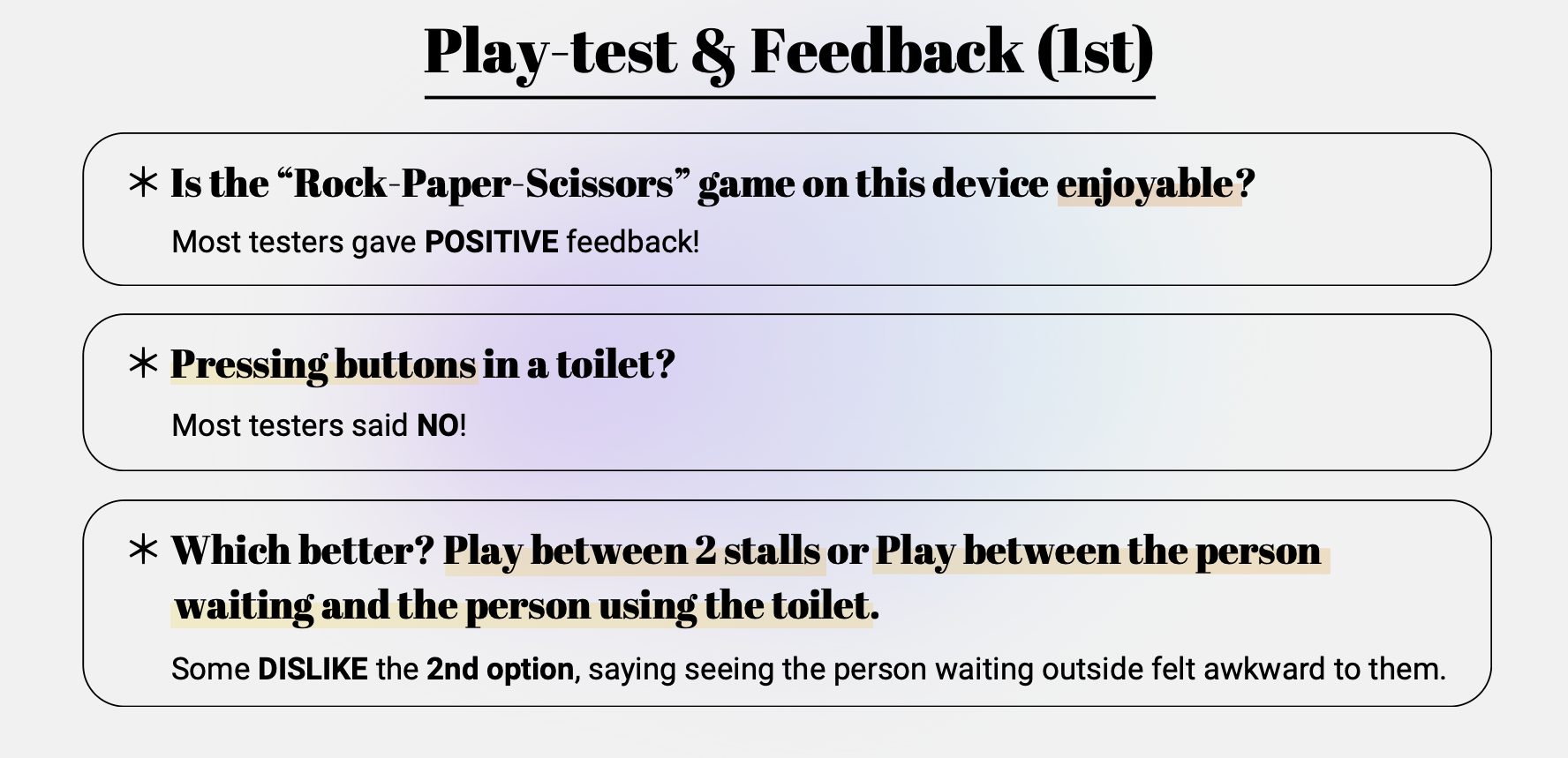
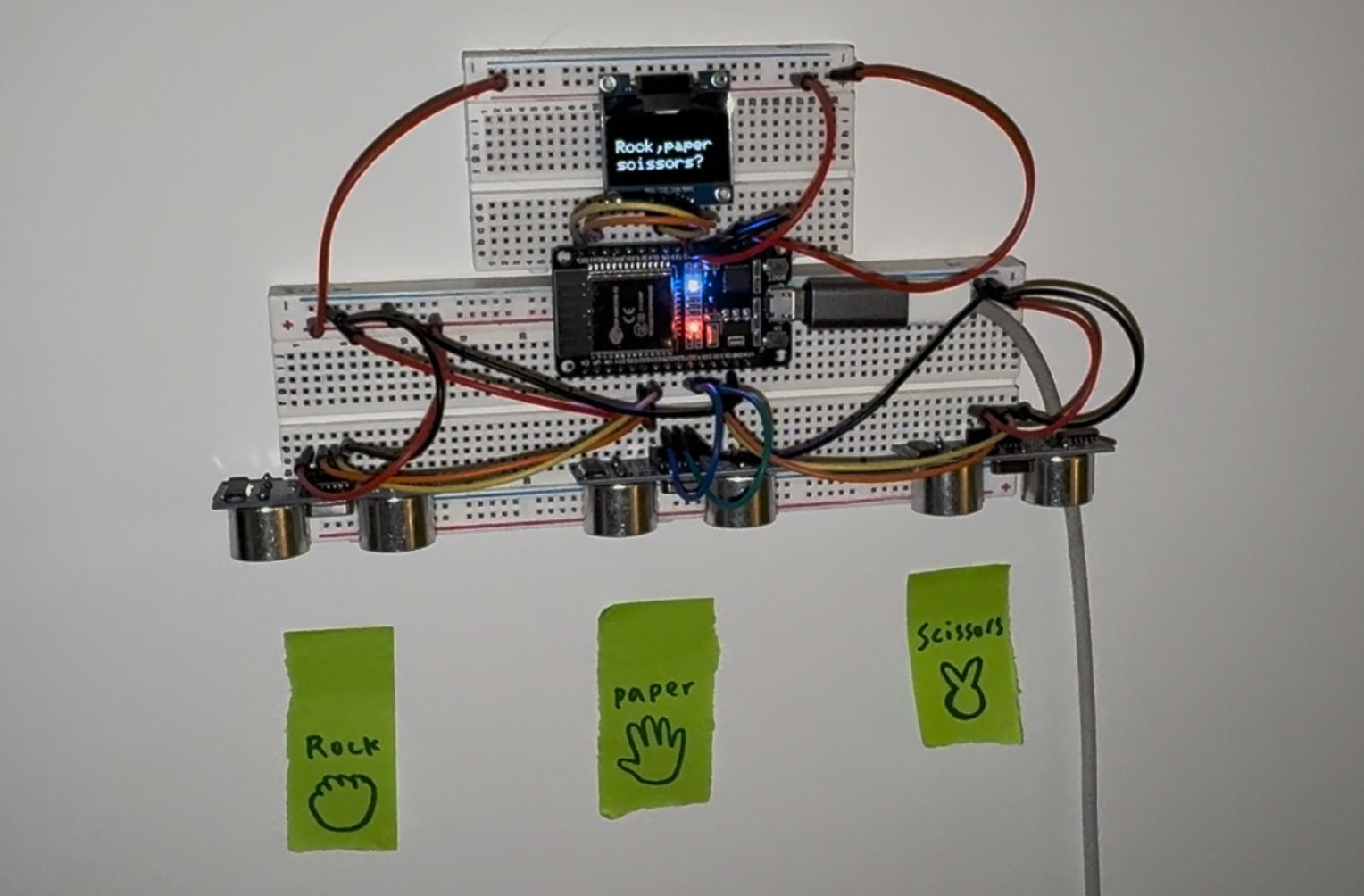
These findings led to design iterations that replaced buttons with non-contact sensors, added waiting prompts, refined game timing, and introduced lightweight cardboard housing to reduce intimidation from exposed electronics.
Toilet Arcade turns an ordinary, hidden space into a quiet stage for shared play. Inside the privacy of restroom stalls, strangers meet through gestures, traces, and small acts of choice, forming connections without names or faces. What begins as a simple game becomes a conversation carried by timing and waiting. In a place designed for isolation and efficiency, the project invites pause, curiosity and mutual presence. By transforming routine into ritual, Toilet Arcade reveals how play can soften boundaries between public and private life and reminds us that even the most unnoticed spaces can hold moments of connection.
The project encourages:
By allowing players to encounter others indirectly through game mechanics, Toilet Arcade offers a model for designing interaction that respects privacy while cultivating social presence. It suggests new possibilities for civic play, especially in environments where people normally avoid communication.
Future development will expand the project in three directions:
Content
Testing additional cooperative and competitive game formats to study how mechanics influence player behavior and emotional response.
Medium and Space
Exploring how different restroom layouts, materials and display formats shape interaction and participation across communities.
Data and Community
Collecting long-term/anonymous interaction data, player feedback and emergent messages to understand how micro-communities form through repeated play in everyday environments.

Toilet Arcade challenges assumptions about where play belongs and who it is for. By inserting games into an unexpected and marginalized public space, the project reveals how playful design can reshape daily routines into moments of connection. It proposes that even the most ordinary environments can become platforms for dialogue, creativity, and shared experience.


Lorem ipsum dolor sit amet, consectetur adipiscing elit. Suspendisse varius enim in eros elementum tristique. Duis cursus, mi quis viverra ornare, eros dolor interdum nulla, ut commodo diam libero vitae erat. Aenean faucibus nibh et justo cursus id rutrum lorem imperdiet. Nunc ut sem vitae risus tristique posuere. uis cursus, mi quis viverra ornare, eros dolor interdum nulla, ut commodo diam libero vitae erat. Aenean faucibus nibh et justo cursus id rutrum lorem imperdiet. Nunc ut sem vitae risus tristique posuere.